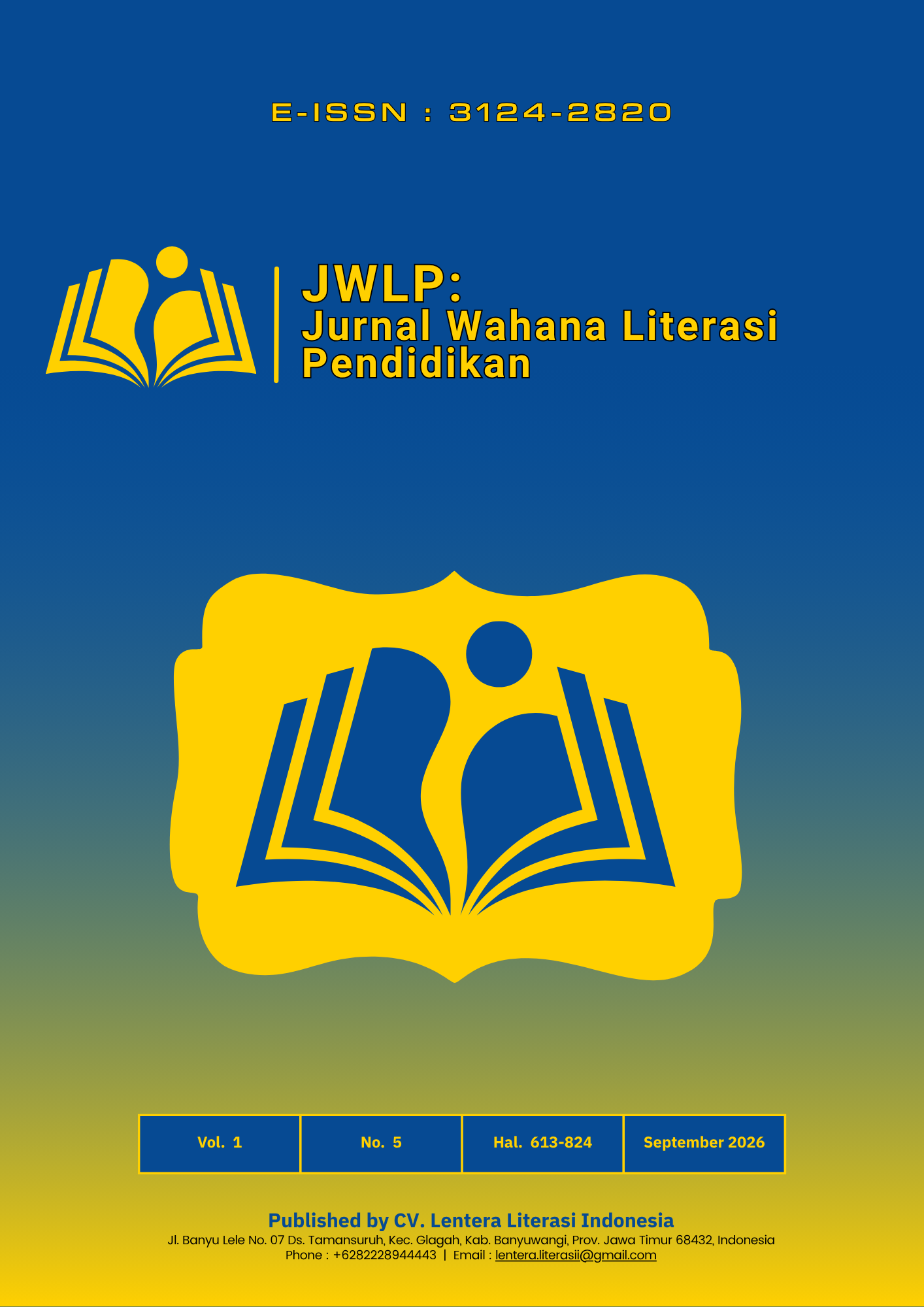
Transformasi Model Pembelajaran PAI di Era Digital
Systematic Literature Review Terhadap Integrasi Teknologi dan Pedagogi Islam
DOI:
https://doi.org/10.58472/jwlp.v1i5.587Kata Kunci:
Learning Transformation, Islamic Religious Education, Digital Technology, Islamic Pedagogy, Systematic Literature Review (SLR)Abstrak
The learning process, including Islamic Religious Education (PAI), has undergone significant changes due to advances in digital technology. Teacher-centered learning has gradually shifted toward more interactive and flexible learning approaches. This study aims to examine how Islamic Religious Education learning models have transformed in the digital era, how technology is utilized in the learning process, and how this transformation relates to the principles of Islamic pedagogy. This study analyzes relevant literature on Islamic Religious Education, learning technology, learning model transformation, and the integration of technology with Islamic educational principles. The research employs a Systematic Literature Review (SLR) method. The findings indicate that digital technology can improve students' understanding, engagement, and independence through the use of digital media, videos, Islamic applications, Learning Management Systems (LMS), e-learning, blended learning, and Artificial Intelligence (AI). Furthermore, the transformation of Islamic Religious Education encourages teachers to shift their roles into facilitators, mentors, and role models, while encouraging students to participate more actively in the learning process. However, the implementation of digital technology in Islamic Religious Education still faces several challenges, including limited digital infrastructure, teachers' digital competencies, internet access, and the accuracy of religious information. Therefore, the integration of technology into Islamic Religious Education must consider the principles of ta'lim, tarbiyah, and ta'dib to ensure that knowledge development, personality cultivation, and the formation of students' manners and moral character remain balanced. Thus, digital technology should be utilized as a supporting tool for learning, rather than as a replacement for teachers or the fundamental principles of Islamic education.
Unduhan
Diterbitkan
Cara Mengutip
Terbitan
Bagian
Lisensi
Hak Cipta (c) 2026 Jurnal Wahana Literasi Pendidikan

Artikel ini berlisensiCreative Commons Attribution-NonCommercial-ShareAlike 4.0 International License.